
Walk into most flooring showrooms and you’ll see three products that all photograph the same way: warm wood tones, visible grain, a name that says “oak” or “hardwood” somewhere on the box. They are not the same product, and the differences only show up after the floor’s been down for a few years — which is exactly when it’s too late to change your mind.
Solid Hardwood
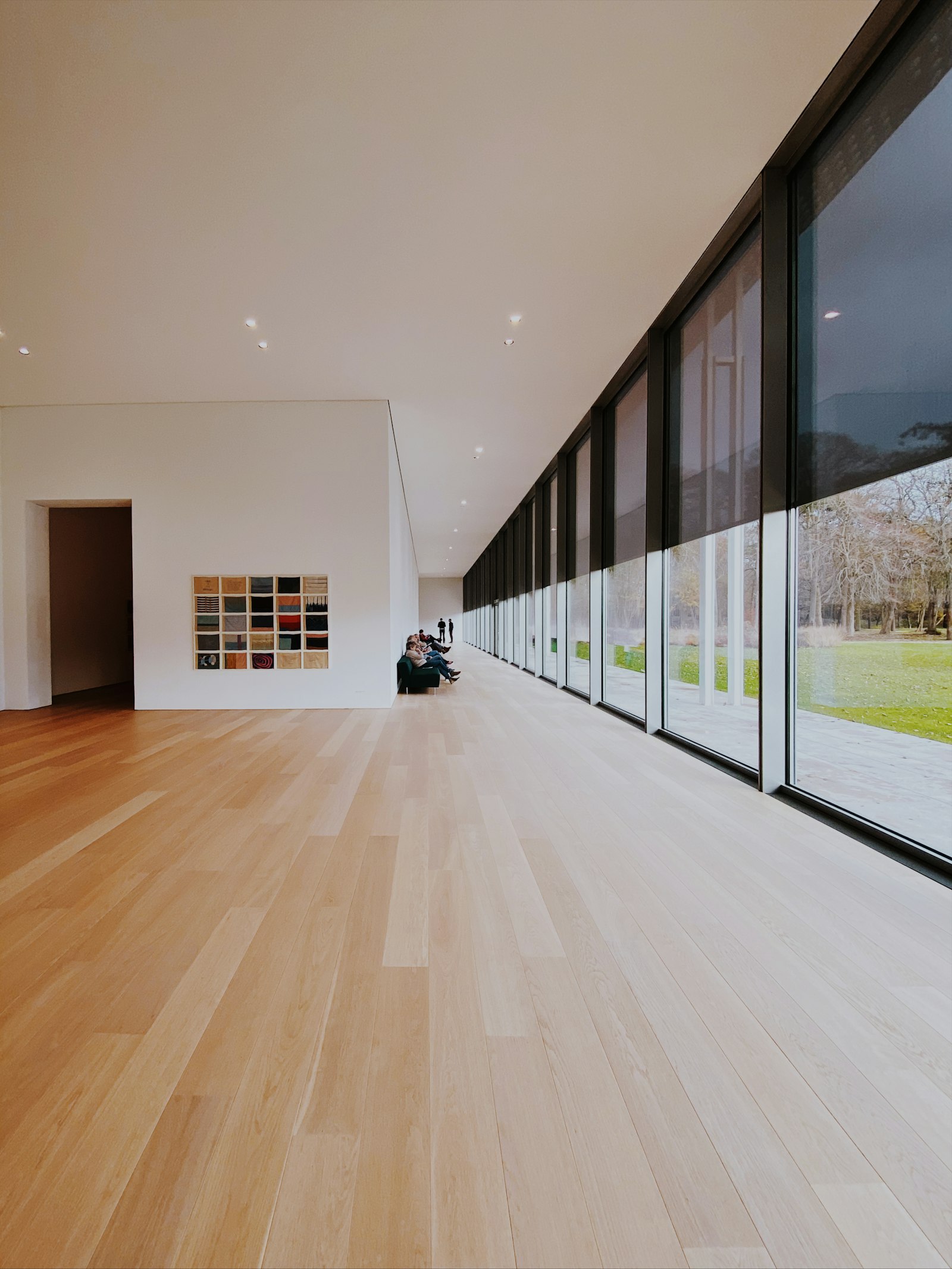
Solid white oak is exactly what it sounds like: a single piece of oak, milled to a plank, top to bottom. Nothing laminated, nothing printed. What you see on the surface is the same wood all the way through the board.
That matters for two reasons. First, solid wood can be sanded and refinished many times over its life — a scratched, worn, or dated solid oak floor can look brand new again with sanding and a new finish. Second, there’s no image layer, no wear layer, no coating that eventually fails and reveals the print underneath.
Engineered Wood
Engineered flooring is real wood on top — usually a thin veneer — bonded over layers of plywood or high-density fiberboard. It’s a legitimate, often smart choice, particularly over concrete slabs or in basements, and it handles humidity swings better than solid wood because the cross-layered core resists expansion and contraction.
The tradeoff: that top wood veneer is thin. It can typically be refinished once, sometimes not at all. It’s a good product for the right situation — but it’s a different product, with a different lifespan, than solid hardwood.
Laminate
Laminate isn’t wood. It’s a high-resolution photograph of wood grain, fused under a clear wear layer, over a composite core. It can look convincing from a few feet away, and it’s typically the least expensive of the three.
But because the “wood” is a picture, laminate can’t be refinished at all. Once the wear layer scratches through, or the image layer chips, the fix is replacement, not repair.
Why This Matters for a High-Traffic, Long-Term Home
If you’re choosing flooring for a home you plan to be in for decades, the math changes. A laminate floor is a purchase you’ll likely make again in 10–15 years. A solid white oak floor, sanded and refinished as needed, is a purchase you make essentially once.
We mill our white oak ourselves, unfinished and solid, at whatever grade, width, and length your project calls for. If you’re weighing solid against engineered or laminate for a specific room, reach out — we’re happy to talk through what actually makes sense for your space.